
4 min read
How Much Does AI Integration Cost?
What the budget is made of: a prototype, development and integration, monthly API costs and support. We work through token costs on a real example and show how to keep spending under control.
"How much does a chatbot cost?" is a lot like "how much does a house cost?" A studio flat is a home, and so is a three-storey villa. So you won't find a single number in this article. Instead we'll break down what the budget is made of, so you can evaluate any proposal yourself and know what you are paying for.
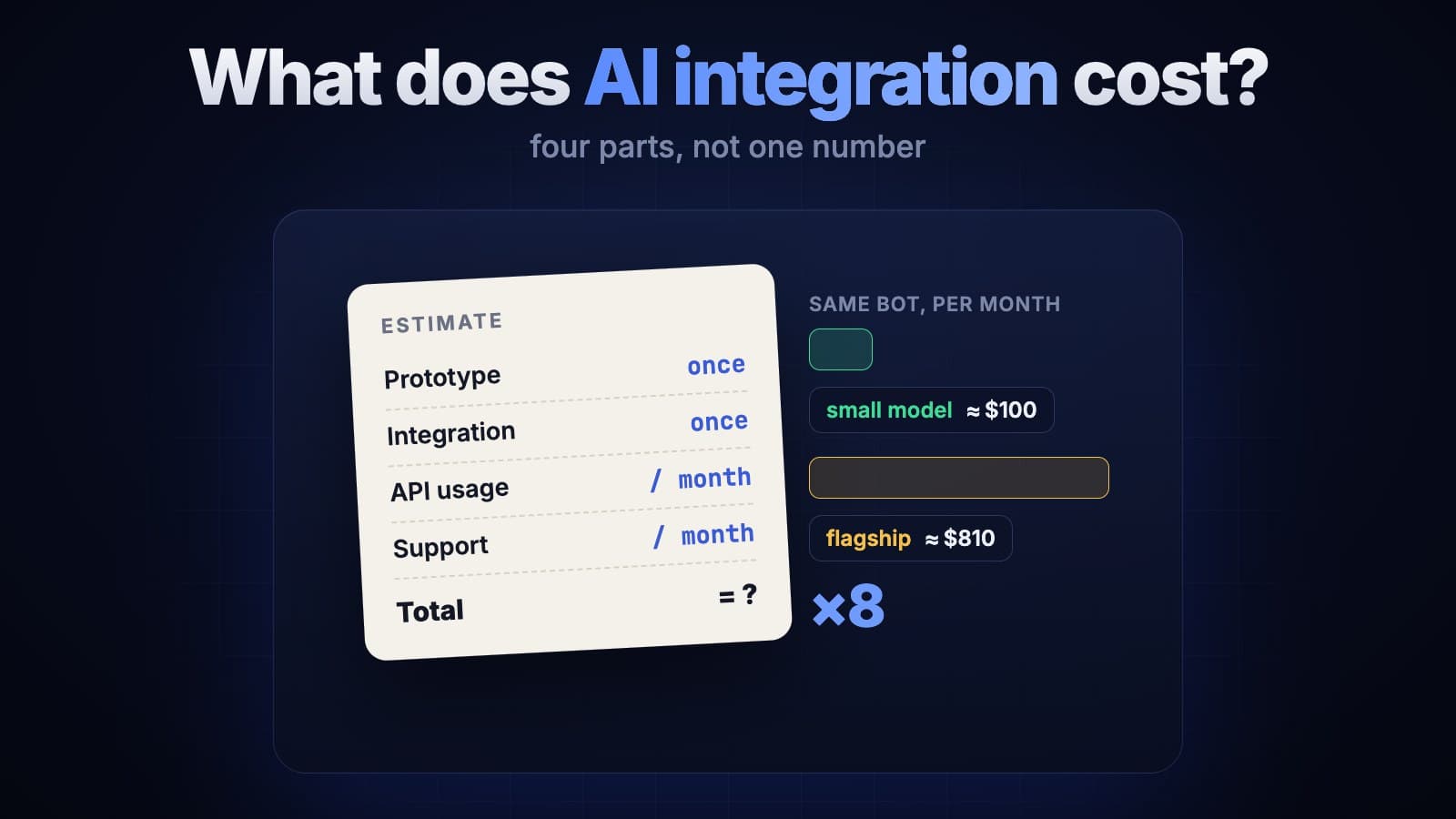
The four parts of the cost
- Analysis and prototype. We study the process, pick a scenario that will actually help, and build a first version on your real data.
- Development and integration. Usually the largest part. Connecting the model itself is easy; most of the time goes into connecting to your website, CRM and messengers, access rights, an admin panel and edge cases.
- Monthly model usage. API fees, or server rent if the model runs on your side.
- Support and improvement. Updating the knowledge base, reviewing failed conversations, adding new scenarios.
The first two are one-off costs; the third and fourth are monthly. Many proposals show only the first number, and the monthly costs come as a surprise later. That is why we estimate all four up front.
Why we start with a prototype
A prototype takes a few weeks and covers one specific process, for example customer questions about delivery and returns. We measure it on real questions: what share gets a correct answer, how much staff time is saved, where the model struggles. With those numbers, saying "yes" or "no" to a bigger budget becomes much easier. Sometimes the prototype shows the problem is not the AI at all but rules that were never written down, and that is a useful result too.
Estimate the API cost yourself
Cloud models are billed per token. A token is a piece of a word: in English, 1,000 tokens is roughly 700–750 words, while Russian and Azerbaijani text takes more tokens. A request is not just the question: instructions, the fragments found in the knowledge base and the earlier part of the conversation are added to it. Output tokens are billed separately and cost more.
Let's run an example. A support bot handles 500 conversations a day with 4 messages each. Every message sends about 3,000 tokens to the model and gets 300 tokens back.
- Requests per day: 500 × 4 = 2,000
- Input tokens: 2,000 × 3,000 = 6 million
- Output tokens: 2,000 × 300 = 600 thousand
| Model class | Approx. price (per 1M tokens) | Per day | Per month |
|---|---|---|---|
| Small, fast model | $0.40 input / $1.60 output | ≈ $3.4 | ≈ $100 |
| Flagship model | $3 input / $15 output | ≈ $27 | ≈ $810 |
Prices change often and vary by provider, so read the table as an order of magnitude rather than an exact rate card. The key takeaway: the same bot can cost eight times more or less depending on the model you choose.
How we keep costs down
- Routing. Simple questions go to a cheap model, complex analysis to a strong one. In real projects most requests are simple.
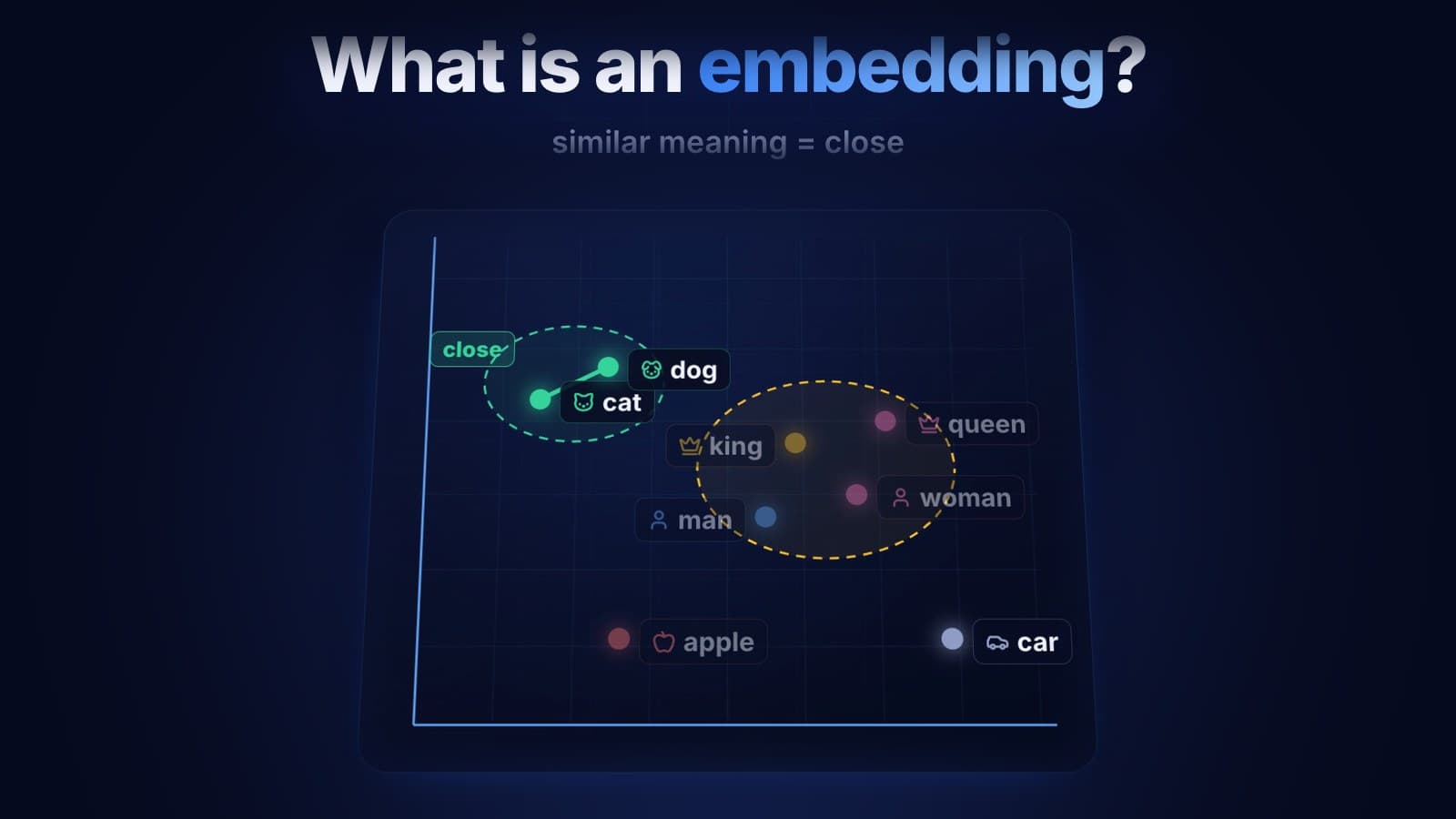
- Only the fragments that matter. We don't send whole documents to the model; semantic search finds just the relevant parts. We explain how that works in our article on embeddings.
- Caching. Long instructions repeated in every request are cached, and providers give a substantial discount on those tokens.
- Limits. Per-user and per-day caps, so a bug or abuse can't blow up the bill.
- A dashboard. You see spending by day, scenario and model, and notice any spike right away.
Is a self-hosted model cheaper?
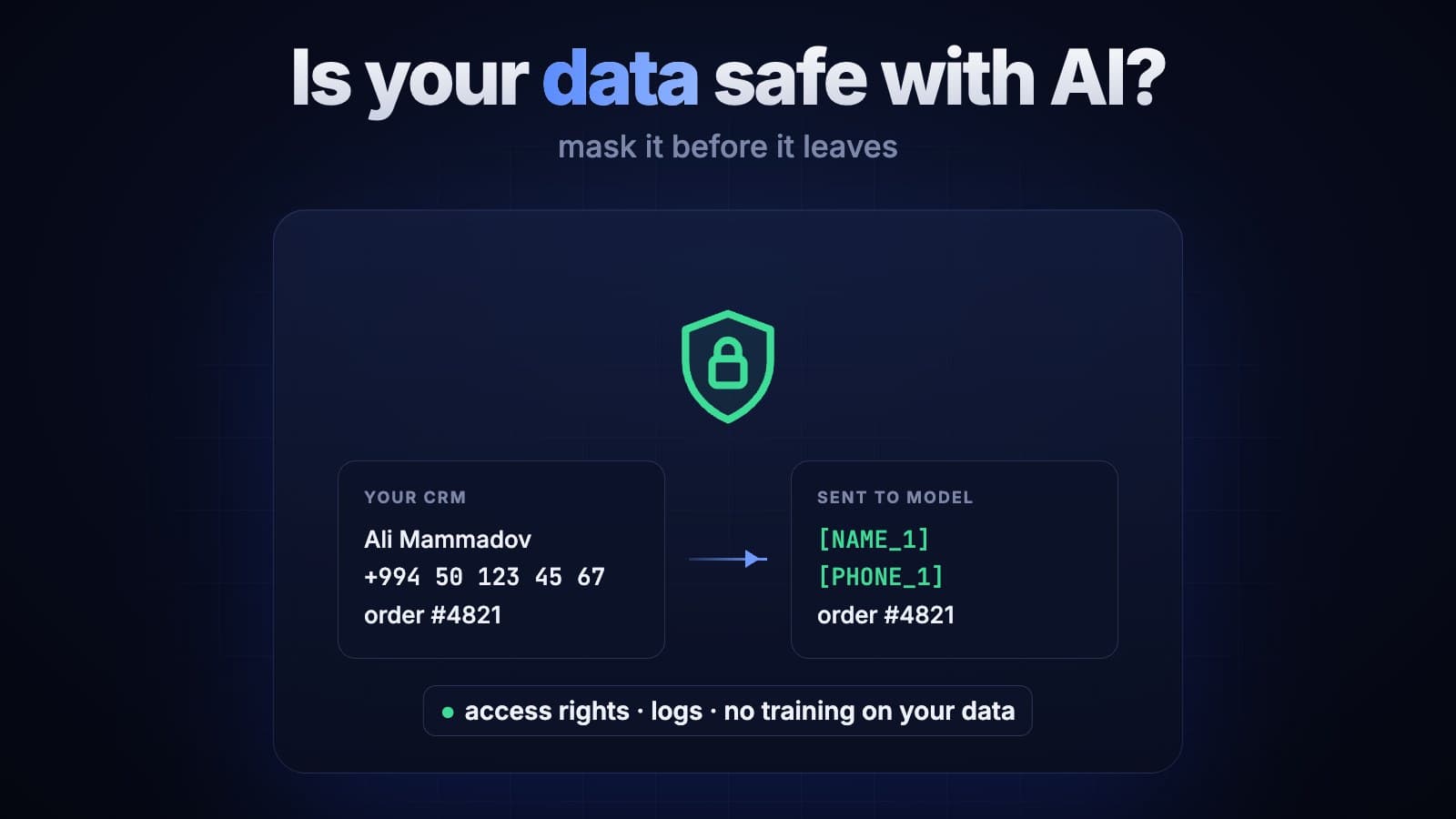
There is no API bill, but there is monthly GPU server rent and the cost of running it. That amount is fixed no matter how many requests you make. So a self-hosted model usually pays off in two cases: very high request volume, or data that must never leave your perimeter under any circumstances. We discuss the second case in detail in our article on data security.
Costs people rarely mention
- Preparing the data. Outdated instructions, documents that contradict each other, rules that were never written down. Sorting this out often takes your team's time.
- Test questions. To measure quality you need to collect 100–200 real questions with correct answers.
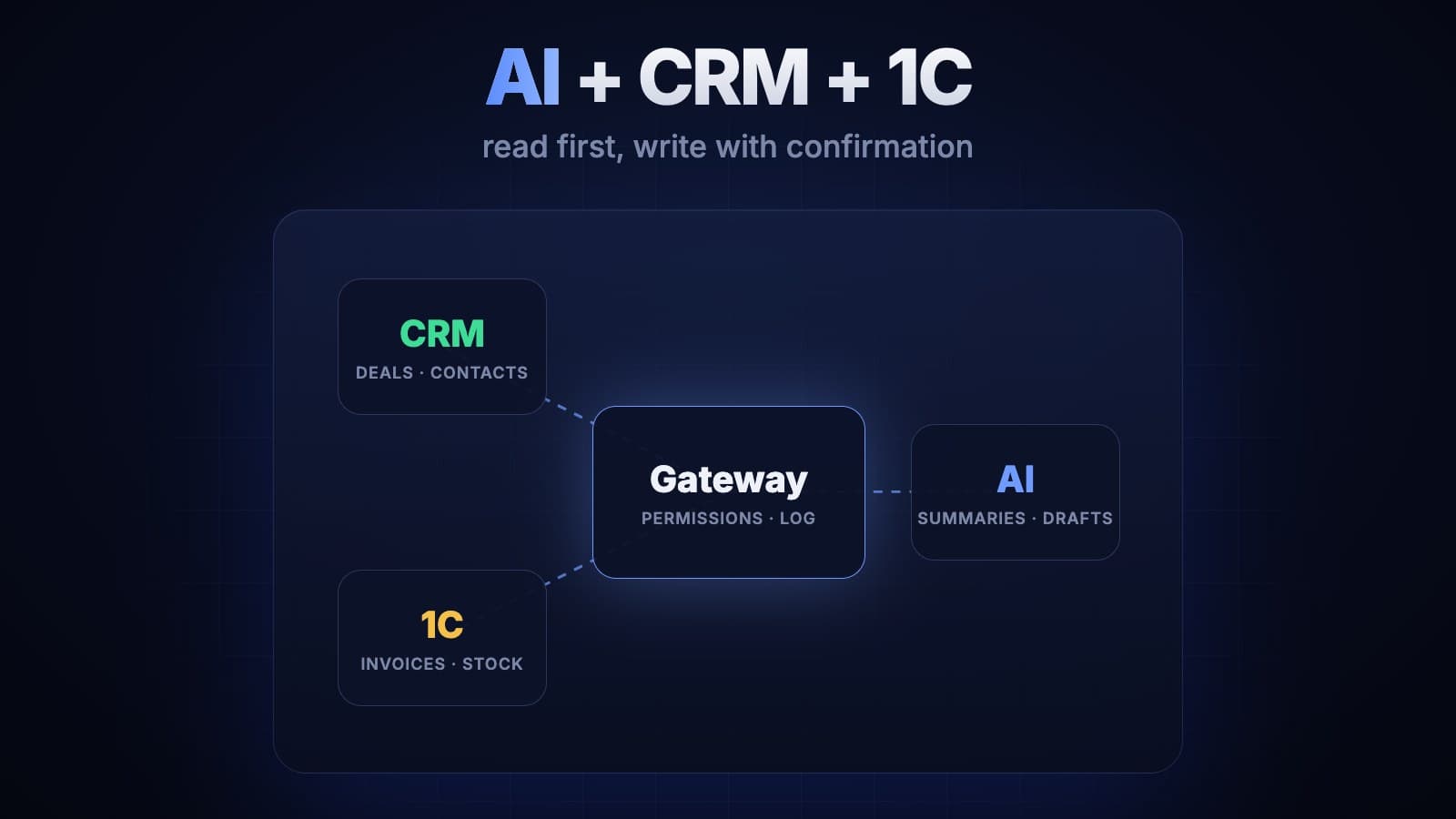
- Integration complexity. If your system has an API, the work goes fast; if not, it needs a separate solution. We cover this in our article on CRM and 1C integration.
How to measure the return
The simplest way is to measure the automated work in hours. If an operator spends 3 hours a day on repetitive questions and the bot closes half of them, that saves over 30 hours a month. Compare that with the cost of an operator's hour and subtract the monthly API and support costs. If the result is positive, the project pays for itself. If it is negative, look for a different scenario; that is exactly what the prototype is for.
The bottom line
The cost of AI integration is not one number but four parts, and each of them can be managed. A small prototype at the start, a sensible choice of model and spending tracked on a dashboard make the budget predictable.
Our AI integration service works exactly this way: a prototype for one process first, then a decision based on real numbers. If you'd like a rough estimate for your scenario, send us a request.